Choose the Right Melon Variety
Select a variety that suits your climate and taste (e.g., Cantaloupe, Honeydew, Watermelon).
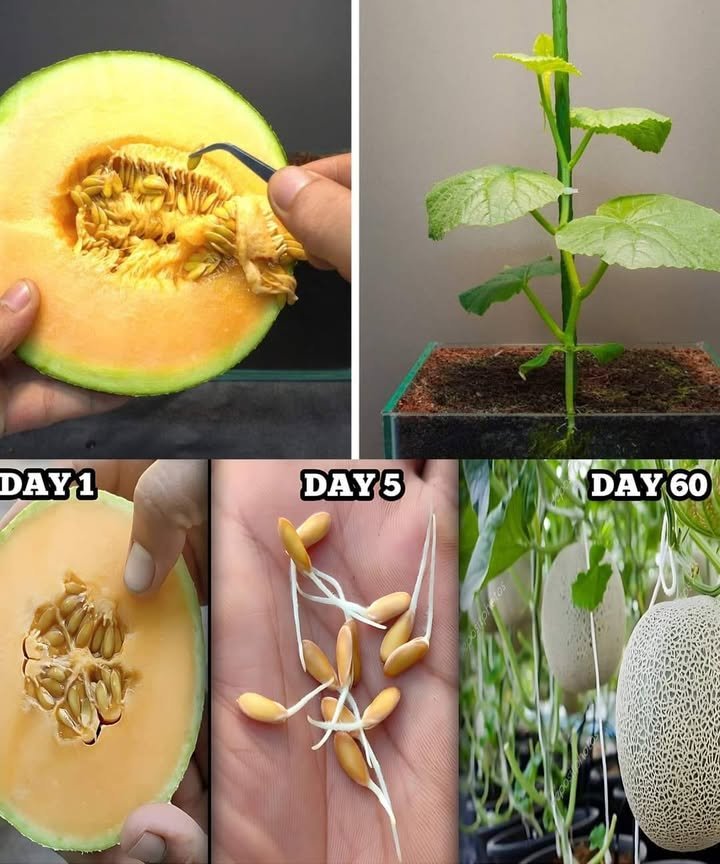
Start Seeds Indoors
- Fill seed trays or small pots with seed starting mix.
- Sow seeds 1/2 inch deep, 2 seeds per pot.
- Water gently to moisten the soil.
- Cover with plastic wrap or a seedling dome.
- Place in a warm area (70-85°F).
Transplant Seedlings Outdoors
- Harden off seedlings by gradually exposing them to outdoor conditions over 7-10 days.
- Prepare a sunny, well-drained spot with amended soil.
- Space plants 2-3 feet apart in rows 5-6 feet apart.
- Transplant seedlings and water thoroughly.
Care for Melon Plants
- Watering: Keep soil consistently moist but not waterlogged. Use mulch to retain moisture and suppress weeds.
- Fertilizing: Mix balanced fertilizer into soil before planting. Side-dress with compost or balanced fertilizer when vines begin to run and when fruits start developing.
- Pruning: Remove small side shoots (suckers) to direct energy to the main vine and fruit production.
Pollination
- Identify male flowers (thin stems) and female flowers (small bulb at the base).
- Use a brush or cotton swab to transfer pollen from male to female flowers if natural pollinators are scarce.
Harvest Melons
- Signs of Ripeness:
- Cantaloupe: Pronounced netting, slips off the vine easily.
- Honeydew: Skin turns creamy yellow, blossom end slightly soft.
- Watermelon: Underside turns creamy yellow, nearest tendril dries out.
- Check daily for ripeness.
- Use a sharp knife or pruners to cut melons from the vine.