Choose the Right Variety
- Select a pumpkin variety suited for your climate and intended use.
- Popular varieties: ‘Jack O’ Lantern’ for carving, ‘Sugar Pie’ for cooking.
Planting Time
- Plant in late spring to early summer after the danger of frost has passed.
- Ensure soil temperatures are above 70°F (21°C).
Soil Preparation
- Use well-draining, fertile soil with a pH of 6.0-6.8.
- Amend soil with compost or well-rotted manure.
Sowing Seeds
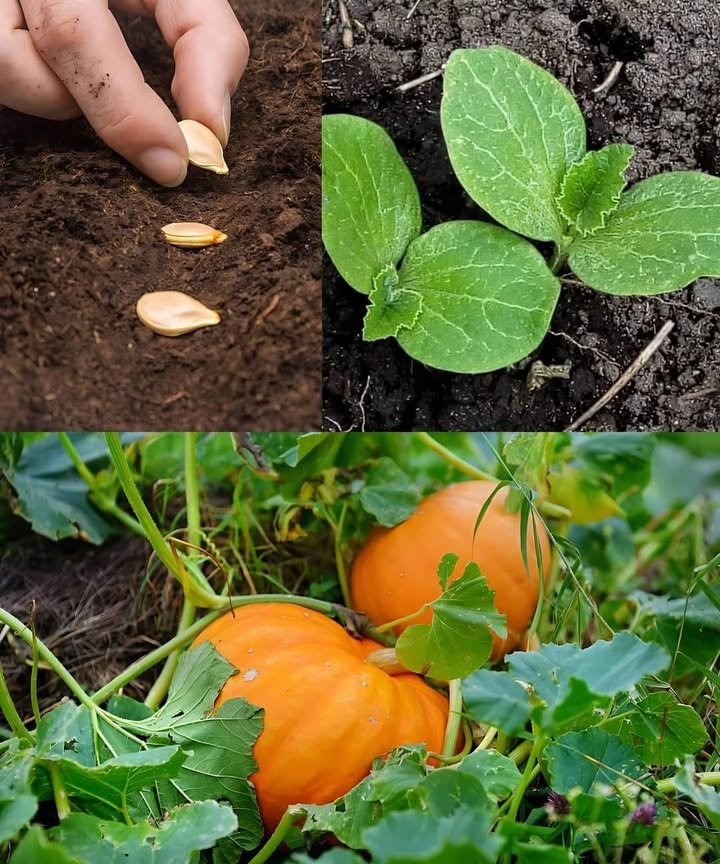
- Sow seeds directly into the garden in small hills or mounds.
- Space hills 4-6 feet apart, plant 2-3 seeds per hill, 1 inch deep.
- Thin to the strongest seedling per hill after they sprout.
Watering and Feeding
- Keep soil consistently moist, especially during flowering and fruiting.
- Water at the base of the plants to avoid fungal diseases.
- Fertilize with high-nitrogen fertilizer initially, then switch to high-phosphorus fertilizer when flowering.
Pollination
- Attract bees for pollination by planting flowers nearby.
- Avoid using pesticides that can harm pollinators.
Managing Vines
- Prune vines to direct energy into fewer, larger pumpkins.
- Position vines to prevent overcrowding and improve air circulation.
Pest and Disease Control
- Monitor for pests like squash bugs, cucumber beetles, and aphids.
- Use organic pest controls like neem oil or insecticidal soap.
- Rotate crops and ensure proper spacing to prevent diseases.
Harvesting
- Harvest when pumpkins are fully colored and skin is hard.
- Cut pumpkins from the vine with a few inches of stem attached before the first frost.
Curing and Storing
Cure pumpkins in the sun for 7-10 days to harden the skin.
Store in a cool, dry place.
Additional Tips
- ulching: Use mulch to retain soil moisture and suppress weeds.
- Companion Planting: Grow pumpkins with corn and beans for mutual benefits.
- Regular Monitoring: Check plants regularly for pests or diseases and address issues promptly.