Materials Needed
- Purple dragon fruit cutting
- Pot or container with drainage holes
- Cactus or succulent potting mix
- Watering can or spray bottle
- Rooting hormone (optional)
- Support structure (trellis or stake)
Step-by-Step Guide
- Select a Healthy Cutting
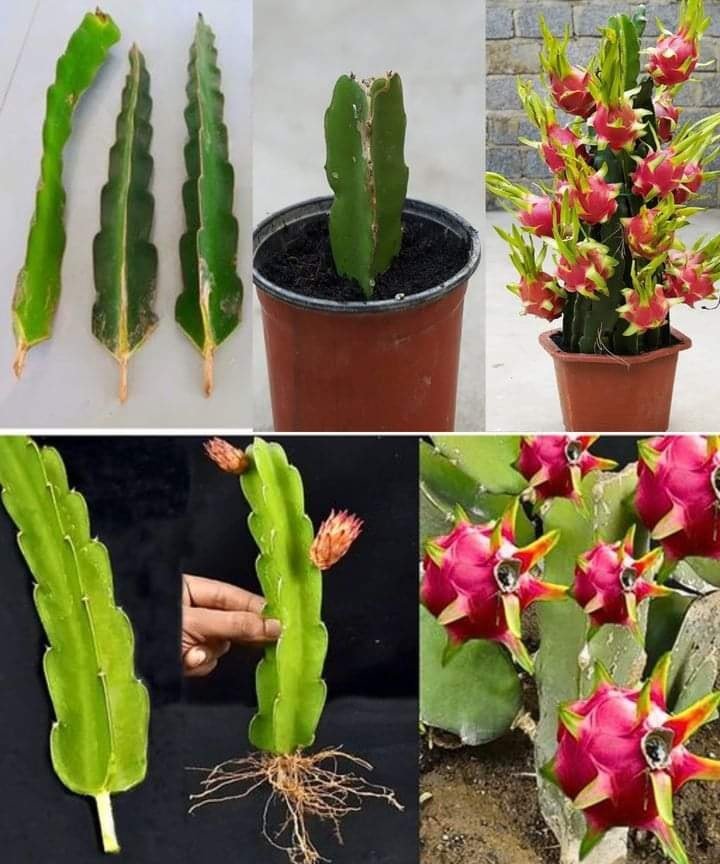
Choose a healthy, mature dragon fruit stem, 6-12 inches long with at least one or two segments. - Prepare the Cutting
Allow the cutting to dry and callous for a few days to prevent rot.
Optionally, dip the cut end in rooting hormone for faster root development. - Prepare the Pot and Soil
Select a pot with good drainage holes.
Fill the pot with cactus or succulent potting mix. - Plant the Cutting
Insert the cut end of the dragon fruit cutting into the soil, burying it 2-3 inches deep.
Firmly press the soil around the base. - Provide Support
Place a trellis, stake, or other support structure near the cutting.
Gently tie the cutting to the support. - Watering
Water the soil lightly to keep it moist but not waterlogged.
Use a spray bottle or watering can to ensure even moisture. - Light and Temperature
Place the pot in bright, indirect sunlight.
Maintain a temperature between 65-85°F (18-29°C). - Monitor and Maintain
Check the soil regularly to keep it moist but not soggy.
Look for new growth within a few weeks, indicating successful rooting. - Fertilization
Feed with a balanced fertilizer every 4-6 weeks during the growing season (spring and summer).
Reduce fertilization in the fall and winter. - Transplanting
Transplant to a larger container or garden once it outgrows the initial pot.
Ensure the new location has well-draining soil and ample space for climbing.
Tips for Success
Patience: Dragon fruit plants can take a few months to a year to produce fruit. Be patient and consistent.
Pest Control: Monitor for pests like aphids and spider mites. Treat infestations promptly with insecticidal soap or neem oil.
Pruning: Regularly prune to remove dead or damaged stems and encourage more fruit-bearing branches.