Materials Needed:
- osemary twigs (cuttings) or seeds
- Small pots for cuttings
- Larger pots for mature plants (with drainage holes)
- Well-draining potting mix (with sand or perlite)
- Rooting hormone (optional for cuttings)
- Watering can or spray bottle
- Clear plastic bag or plastic dome (for cuttings)
- Organic fertilizer
- Growing Rosemary from Cuttings
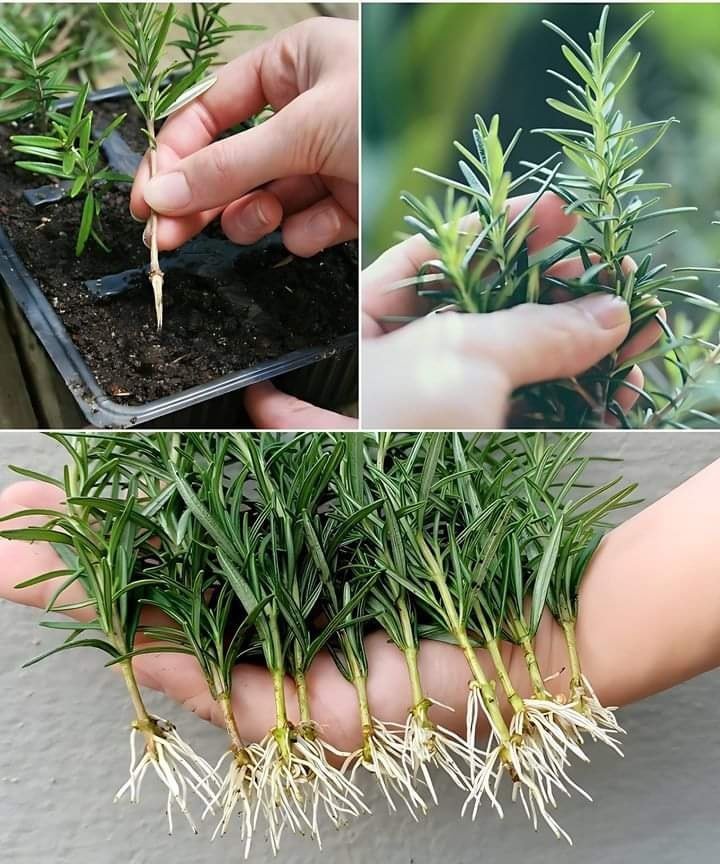
Select and Prepare Cuttings
- Choose healthy, non-flowering stems (4-6 inches).
- Strip leaves from the bottom 2 inches.
- (Optional) Dip cut ends in rooting hormone.
Plant Cuttings:
- Fill small pots with well-draining mix.
- Insert cuttings 1-2 inches deep.
- Water soil gently.
Create Humid Environment:
- Cover pots with clear plastic bags or domes.
- Place in bright, indirect light.
Care for Cuttings:
- Keep soil moist, not waterlogged; mist if dry.
- Check for roots after 4-6 weeks.
- Transplant rooted cuttings into larger pots.
Transplant and Ongoing Care:
- Use larger pots with well-draining mix.
- Place in sunny location (6-8 hours of sunlight).
- Water when top inch of soil is dry.
- Fertilize every 4-6 weeks during growing season.
- Growing Rosemary from Seeds
Prepare and Sow Seeds:
Start indoors 8-10 weeks before last frost.
Fill trays or pots with seed-starting mix.
Sprinkle seeds, cover lightly with soil (¼ inch deep), mist gently.
Germination:
- Place in warm, bright location or under grow lights.
- Keep soil moist, not soggy.
- Germination takes 2-4 weeks.
Transplant Seedlings:
- Transplant seedlings with true leaves into larger pots with well-draining mix.
- Place in sunny location.
Care for Seedlings and Mature Plants:
- Water when top inch of soil is dry.
- Ensure 6-8 hours of sunlight.
- Fertilize every 4-6 weeks during growing season.
- Prune regularly to encourage bushy growth.
Tips for Success:
- Provide 6-8 hours of direct sunlight daily.
- Allow soil to dry slightly between waterings.
- Avoid over-misting; prefer dry conditions.
- Maintain temperatures above 40°F (4°C).
- Monitor for pests and treat naturally if needed.