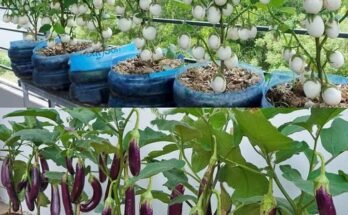
Materials Needed:
- Containers (at least 5 gallons, with drainage holes)
- High-quality potting mix
- Eggplant seeds or seedlings
- Balanced fertilizer or compost
- Watering can or hose
- Mulch (optional)
Step-by-Step Instructions:
Choose the Right Container:
Use a container of at least 5 gallons with drainage holes.
Select the Soil:
- Use high-quality potting mix.
- Mix in compost or balanced fertilizer.
Plant the Eggplant:
- Sow seeds indoors 8-10 weeks before the last frost; transplant seedlings at 6-8 inches tall.
- Fill the container with potting mix, leaving an inch at the top.
- Plant one seedling per container, covering the root ball and firming the soil.
Position the Container:
- Place in a spot with 6-8 hours of direct sunlight daily.
- Choose a sheltered location if possible.
Water and Feed:
- Water thoroughly and keep the soil moist but not waterlogged.
- Water regularly, especially in hot weather.
- Feed with balanced fertilizer every 2-3 weeks.
Mulching (Optional):
Apply mulch to retain moisture and regulate soil temperature.
Support the Plants:
- Use stakes or a tomato cage for support.
- Tie the plant to the support with soft ties.
Pest and Disease Management:
- Inspect regularly for pests and remove by hand or use insecticidal soap.
- Watch for diseases and remove affected leaves to ensure good air circulation.
Harvesting:
- Harvest when eggplants are glossy and firm, usually 70-85 days after planting.
- Cut with pruning shears or a sharp knife, leaving a short stem.
Continued Care:
- Continue regular watering and feeding.
- Prune yellowing or damaged leaves.
Tips for Success:
- Choose compact or dwarf varieties for container growing.
- Rotate the container for even sunlight exposure.
- Monitor soil moisture as containers dry out quickly.
- By following these steps, you can grow eggplants in containers and enjoy a productive harvest.