SIMPLIFIED METHOD WITH INSTRUCTIONS
Advantages of an Underground Greenhouse
Thermal Stability:
The soil has natural insulating properties. Just a few meters below the surface, the ground maintains a relatively stable temperature.
Protection from the Elements:
Underground greenhouses are less exposed to wind, snow, and hail, reducing the risk of damage.
Extended Growing Season:
The stable environment allows cultivation even in the coldest months.
Sustainability:
Requires less energy for heating thanks to natural insulation.
Choosing the Right Location
Sun Exposure:
Select a spot with maximum sunlight. South-facing locations are ideal in the Northern Hemisphere, and north-facing in the Southern Hemisphere.
Water Drainage:
Ensure the area has good drainage to prevent water stagnation. Consider installing raised beds or gravel paths to improve drainage.
Accessibility:
Choose a location that’s easy to access year-round.
Building the Underground Greenhouse
Excavation
Depth: Dig 2.5–3 meters deep to benefit from the soil’s insulation. Depth may vary based on your region’s frost line.
Width and Length: Adjust dimensions to your needs. A standard size might be 3×6 meters, but customize as required.
Walls:
Build walls using bricks, stones, or earthbags. Reinforce them with cement if necessary.
Insulate the north wall to retain heat. Use materials like straw bales, foam insulation, or other insulating options.
Roofing:
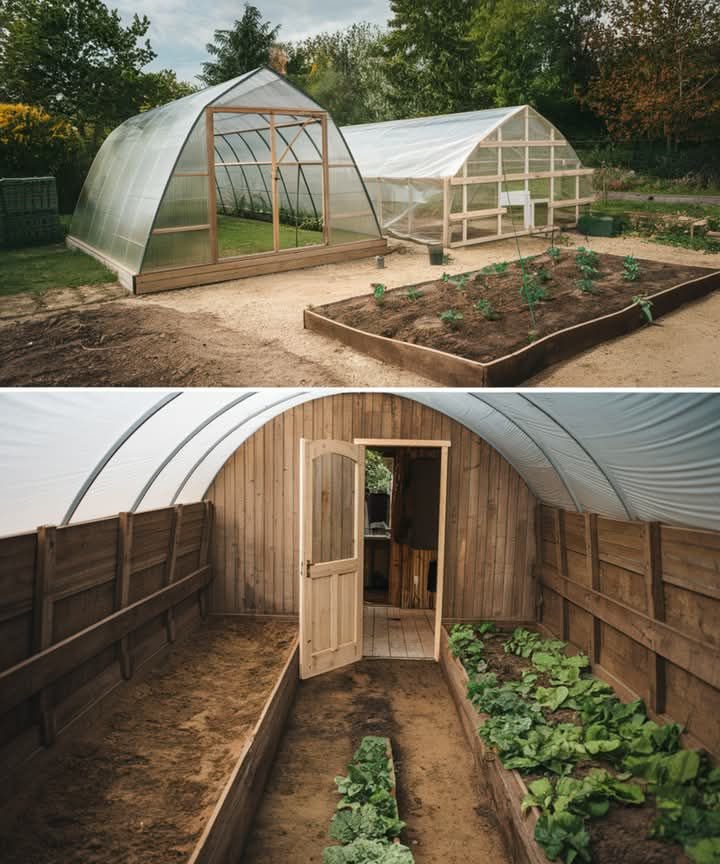
Use UV-resistant greenhouse plastic, polycarbonate panels, or glass for the roof.
Ensure the roof is sloped to maximize sunlight and allow rain or snow runoff.
Install vents or windows in the roof or upper end of the sloped roof to release hot air.
Consider adding doors at each end of the greenhouse to improve airflow and provide easy access.
Maintaining the Underground Greenhouse
Monitoring: Regularly check temperature and humidity. Consider installing a thermostat.
Pest Control: Due to its unique construction, an underground greenhouse may attract certain pests. Inspect frequently and use natural deterrents.
Watering: Adjust watering based on plant needs and humidity. Overwatering can lead to drainage issues.
Additional Tips:
Water Barrels: Place barrels of water inside the greenhouse. They absorb heat during the day and release it at night, stabilizing temperatures.
Water Barrels: Place barrels of water inside the greenhouse. They absorb heat during the day and release it at night, stabilizing temperatures.
Reflective Surfaces:
Apply reflective materials to the walls to maximize light distribution.
Conclusion:
An underground greenhouse is a fantastic and sustainable way to grow plants year-round. While it requires an initial commitment and investment, the benefits of producing fresh, home-grown produce even during the coldest months are well worth it. Regular maintenance and inspection will ensure the best growing conditions for your plants.