Measure and Cut the PVC Pipe:
Determine the appropriate length of PVC pipe for your plant’s root depth. For small plants, a 12-18 inch pipe is usually sufficient, while for larger trees, it may range from 2 to 3 feet. Cut the PVC pipe to the desired length using a saw.
Drill Holes:
Create evenly spaced holes along the length of the PVC pipe. The number and size of holes will depend on the plant’s size and water requirements. For smaller plants, 1/16 to 1/8 inch holes every 6-8 inches may suffice, while larger trees may need larger holes.
Place Geotextile Fabric (Optional):
Wrapping a piece of geotextile fabric around the bottom of the pipe can help prevent clogs and keep the pipe clean. Secure it with a tie or adhesive.
Fill the Pipe with Gravel:
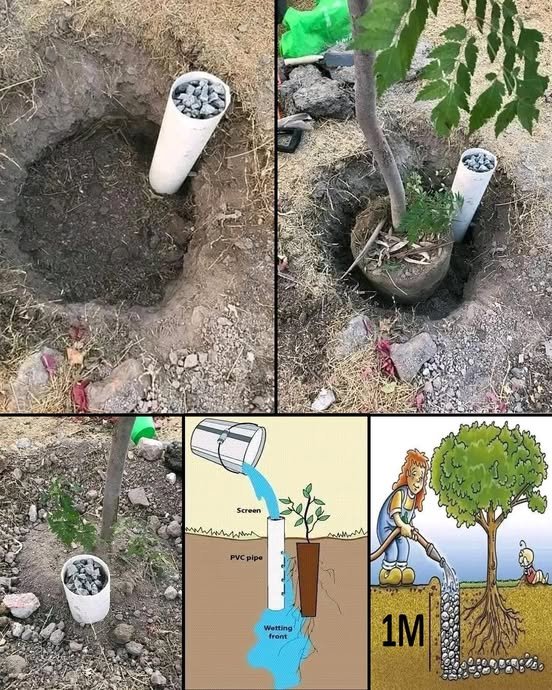
Fill the PVC pipe with small stones or gravel to a height just below the lowest hole. This layer of material will help distribute water evenly around the roots and prevent soil from entering the pipe.
Position the PVC Pipe:
Dig a hole next to your plant or tree, deep enough to accommodate the pipe. Ensure that the top of the pipe is slightly above ground level to make watering easier. Position the pipe vertically and gently pack soil around it to hold it in place.
Watering:
Water your plants by pouring water into the PVC pipe. The water will seep through the holes and reach the root zone directly, ensuring efficient and deep watering.